

Property Flood Resilience (PFR)
Tandem Contracts can survey, specify and install approved flood defence products to all residential and most commercial properties.
All products installed by Tandem Contracts are kitemark or KIWA approved, ensuring recognition by insurance companies and access to potential Government funding relating to flood resilience.
10 Years ago, the UK Government published Floodplan – an action plan to build the resilience of people and properties. The Chair’s opening comments were as follows:
“Flooding presents a significant and growing risk to people, properties and businesses. According to the latest Environment Agency national flood risk assessment, around 6.3 million properties in England are now at risk. Of this, some 4.6 million are at risk of surface water flooding. This is predicted to grow to around 8 million or 1 in 4 homes by the middle of the century.
The impacts of flooding are severe and long-lasting, both emotionally and physically. Flooded homes and businesses can also suffer financially through:
- Reduced market value
- Higher insurance premiums
- Difficulty finding insurance
These consequences also disproportionately affect the most vulnerable in society, leaving families, business owners and communities in difficult circumstances.
Property flood resilience (PFR) measures can significantly reduce the impacts of flooding. They help people and businesses recover quickly, particularly in places that experience surface water flooding where the depth of flood water tends to be shallower.”
And from the Governments 2024 National Assessment of flood and coastal erosion risk in England in 2024:
“With climate change the total number of properties in areas at risk from rivers and the sea or surface water could increase to around 8 million by mid-century. In other words, 1 in 4 properties in England will be in areas at risk of flooding from rivers and the sea or surface water by mid-century.”
Property Flood Resilience (PFR) – products and strategies
Flooding of individual properties generally occurs through 4 main routes:
- Via foul and combined sewers and drains. Contaminated flood water will begin to enter the property via the toilet and ground floor drain connections as the flood water rises.
- Via the sub-floor area of the property. Flood water enters the sub floor of the building via airbricks located around the property. As flood waters rise the contaminated water will rise from under the ground floor.
- Through groundfloor windows and doors. As the waters rise up the walls of the buildings, water enters the property via the external windows and doors.
- Through poorly finished service holes at low level in the fabric of the building.
Historical Property Flood Resilience Measures
Individual properties relied on the speedy deployment of manually fitted flood defenses stored on-site, typically including the following:
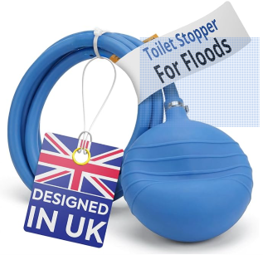
- Toilet flood stoppers. Typically, inflatable toilet stoppers requiring to occupier to find, deploy and inflate at each toilet.
- Airbrick flood covers stored on-site or attached to the airbrick. Both types requiring the availability of the correct number of airbrick covers. An occupant available at the time of the flood would need to know where all the airbricks were and how to apply the covers. These airbrick covers would need to have sealed frames fitted at each airbrick for the covers to attach to in the event of a flood.
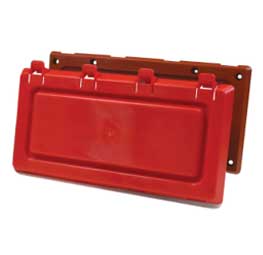
It should be noted that many flood airbricks, covers and/or their framework reduce the free airflow area of airbricks potentially causing issues relating to sub-floor ventilation and the subsequent issues relating to rot and mold growth. Many may result in non-compliance in relation to recent new legislation relating to Awaab’s Law.
Flood water entering the sub-floor area of a building but not necessarily reaching the ground floor often results in a pool of contaminated flood water being held under the floor. This in turn leads to issues relating to damp, smells and mold propagation. Sub-floor areas should therefore be accessed, pumped out and cleaned, requiring significant invasive works to the property.
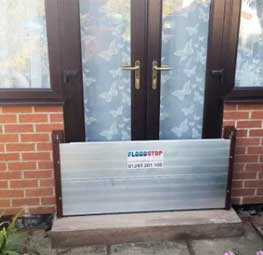
- The deployment of aluminium flood barriers into pre-installed channels. The occupier would need to locate the barrier and fix firmly within the pre-installed channels at every door or low-level window opening.
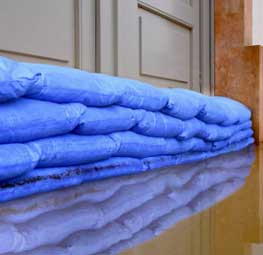
- The application of “Flood sacks” to stop water ingress via poor or damaged masonry. This requires the tenant to have sufficient new flood sacks on-site to install them at weak points on the perimeter of the building.
All of the above require products to be available on site in the required quantities (1 item missing would result in failure to protect); an able bodied person on-site at the time of need, who understood how to apply the products (one item incorrectly installed would result in failure); and sufficient time to deploy the defences.
Passive Property Flood Resilience
Recent years have seen the development of passive flood resilience products, i.e. flood defenses that are both permanently fitted to the building and do not require deployment by the occupier. As such the building is protected from flooding whether occupied or not.
Furthermore, the use of either Kitemarked or KIWA approved products ensures that the products are fully tested for zero leakage, provide opportunity for property owners and occupiers to reduce insurance premiums, and are approved for use on Environment Agency projects, meeting the requirements for EA funding. Examples of these products are as follows:
- Retro fitted non return valves for drains. These are fitted via the manhole into drain outflows from the property. Essentially allowing the flow of soil and waste water into the drain but stopping the flow of flood water back up the same drain. The best in the market also work as a barrier to vermin.
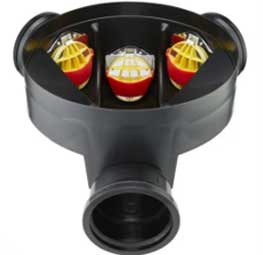
- Automatic operation flood airbricks. The airbrick once installed correctly allows airflow into the sub-floor in non flood conditions but closes as flood waters rise. The Buffalo airbrick also meets the free area requirements of current building regulations and compliance with the requirements of Awaab’s law.
This product is provided with a unique QR code which enables operators to automatically log installation dates and service visits ensuring, and providing evidence of, compliance.
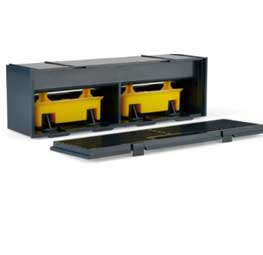
- Anti-Flood external doors and windows. Bespoke, made to measure front and rear external doors and windows. Replacement of the existing door with a kitemarked flood door removes the need for flood barriers at low level fenestrations. The act of closing and engaging the locking mechanism (by lifting the handle in the same way as a standard door), immediately provides an active flood barrier. This removes the need for the unsightly barrier channels as well as the need for the tenant to safely store and properly deploy the barriers in the event of a flood. Whitehouse Construction manufacture a range of styles in their PFR Flood Door range including PVC and composite doors, all are Kitemarked.